
Amite County Criminal Docket Searches
Venue first, channel second. A felony charged in Amite County Circuit Court lives on the Sixth Circuit MEC host, and the public reaches it through Public Access to MEC, called PAMEC. That route is read-only and needs an account. The Sixth Circuit Court Information page lists Amite Circuit Court among the participating courts. For lower-court criminal matters, the county’s Justice Court page covers work that sits outside Amite’s MEC coverage.
Bring a case number when you have one. A citation, notice, or court order usually shows it. Name searches go better with an approximate year and the right court. Amite publishes no local case-number format and no free anonymous criminal-search form, so a clerk can confirm the court and the number’s prefix or punctuation.
- Identify Circuit, Justice, or the municipal court named on the case papers.
- For an electronic Circuit case, register and sign in through PAMEC.
- Search the participating court using the information available after login.
- Open the matching docket sheet and read its newest setting or order.
- Ask the clerk for a plain or certified copy when a court-issued copy is needed.
Amite Criminal Docket Access at the Clerk
PAMEC is not a free all-court lookup. It serves participating MEC files only. Its non-attorney terms charge $10 per year plus $0.20 for each page a search generates, even a no-match result. Free electronic viewing is the rule at the clerk's office. The MEC Administrative Procedures allow it during regular business hours for unrestricted files. A no-match can mean several things. It might be the wrong venue, a Justice or municipal case, a restricted matter, or an older record outside this electronic path.
Registration offers Attorney, Non-Attorney, and Firm Administrator account types. Once in, a user reads docket sheets, case information, notices, and available non-restricted documents. None of that files anything into the case. Card or electronic-check payment online can open access after processing. A mailed check slows it down. Some documents stay limited to attorneys of record or court staff. The login page says so. Do not try to work around those permissions.
Behind the Amite County Circuit docket sits the Circuit Clerk. Celeste Bell McIntyre holds the office at 243 W. Main St., P.O. Box 312, Liberty, MS 39645-0312, with 601-657-8932 for Circuit Court records and certified-copy questions.
The county's Circuit Clerk office page describes the records work behind this docket.
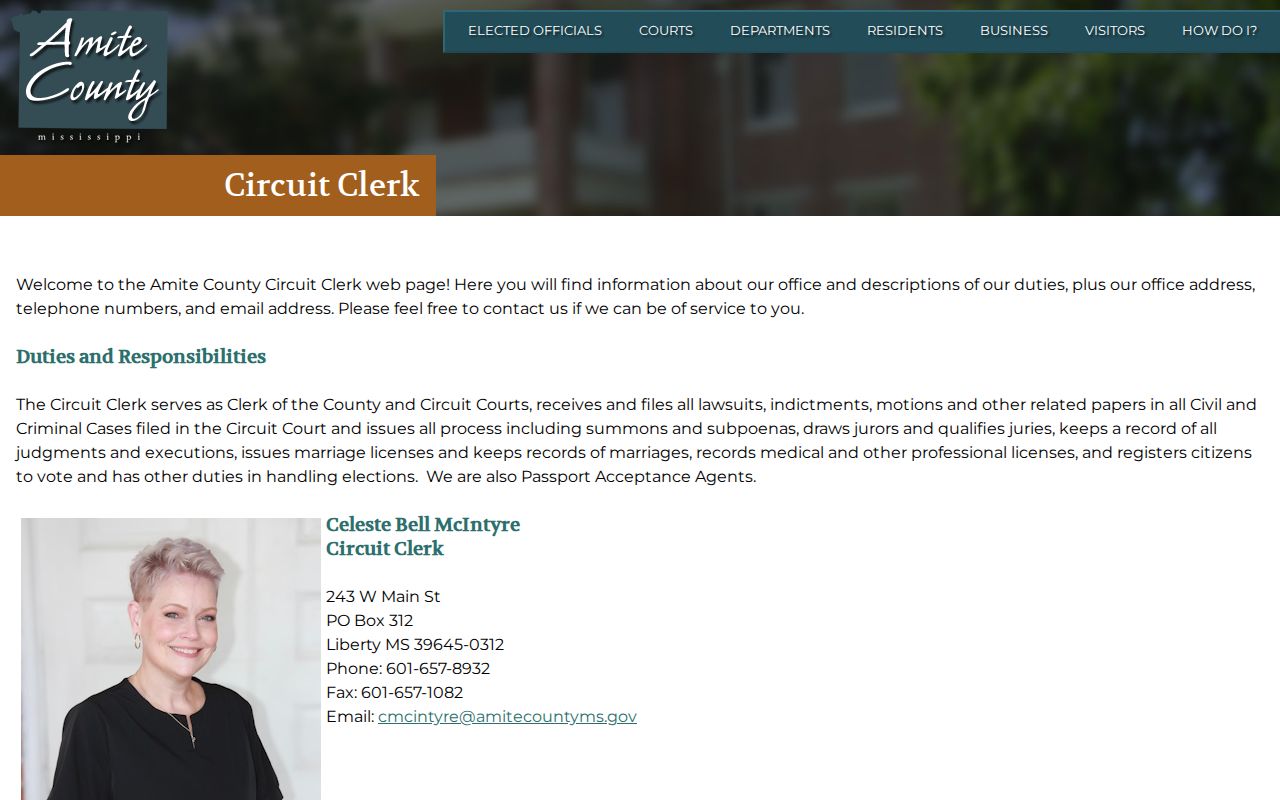
That page also draws the line between the online docket sheet and the clerk-held indictment, motion, judgment, and certified case file.
Criminal Dockets: What They Show
An Amite criminal docket sheet is a chronological case register, not a complete code legend. A Circuit record can show the case header, charge information where entered, filings, notices, settings, orders, and later financial or post-trial events. No published Amite sample docket exists. So the table lists event families documented in the MEC materials. It is not a local screen layout.
| Case header | Expected case number, filing date, court, judge, case style, and status. The local format was not published. |
|---|---|
| Charge and start | Complaint, affidavit, citation, information, or indictment, with offense detail where entered. |
| Settings | Arraignment, pretrial, plea, trial, or sentencing date, time, courtroom, judge, and event label when shown. |
| Register entries | Motions, notices, orders, hearings, disposition, probation, payment, and appeal events in date order. |
| Outcome record | The signed judgment or order is the reliable source for the result, rather than a short status label alone. |
Amite Criminal Docket Flags Need Event Checks
The Sixth Circuit MEC information page lists flags such as BOUND OVER, Trial Pending, SEALED, CLOSED, EXPUNGED, APPEAL, and Nolle Pros Pending. They help locate a case's condition. But they are not a published Amite disposition-code guide. The underlying dated entry, order, or judgment controls what actually happened.
BOUND OVER points to movement from the preliminary stage toward Circuit Court. Trial Pending signals that the file still needs its newest setting read. SEALED or EXPUNGED can limit public display. Compare the latest events before trusting an earlier calendar entry. Call the Circuit Clerk if the event trail is unclear.
Other MEC vocabulary can include Plea Pending, Probation, Partial_Pmt, MOTREF, or a post-trial account entry. That helps as a search cue. The Court Information page does not fix what each label means in a given Amite case. To verify a plea, dismissal, sentence, balance, transfer, or appeal, rely on the case docket, a signed order, and the clerk's record.
Criminal Case Stages on the Docket
A criminal matter can begin with a citation, affidavit, complaint, or indictment. Early entries may cover an initial appearance or arraignment, bond, and the next date. Later entries can record motions, notices, pretrial work, a plea setting, a trial, sentencing, probation, restitution, partial payment, or an appeal. Not every docket has each event family. The date that matters is the newest effective setting or signed order.
Docket flow: Charge Filed → Arraignment → Pretrial → Plea or Trial → Disposition → Sentencing
The Amite Justice Court overview describes the lower-court offenses and initial-appearance role that can come before a Circuit felony docket. That official page shows the split in plain terms.
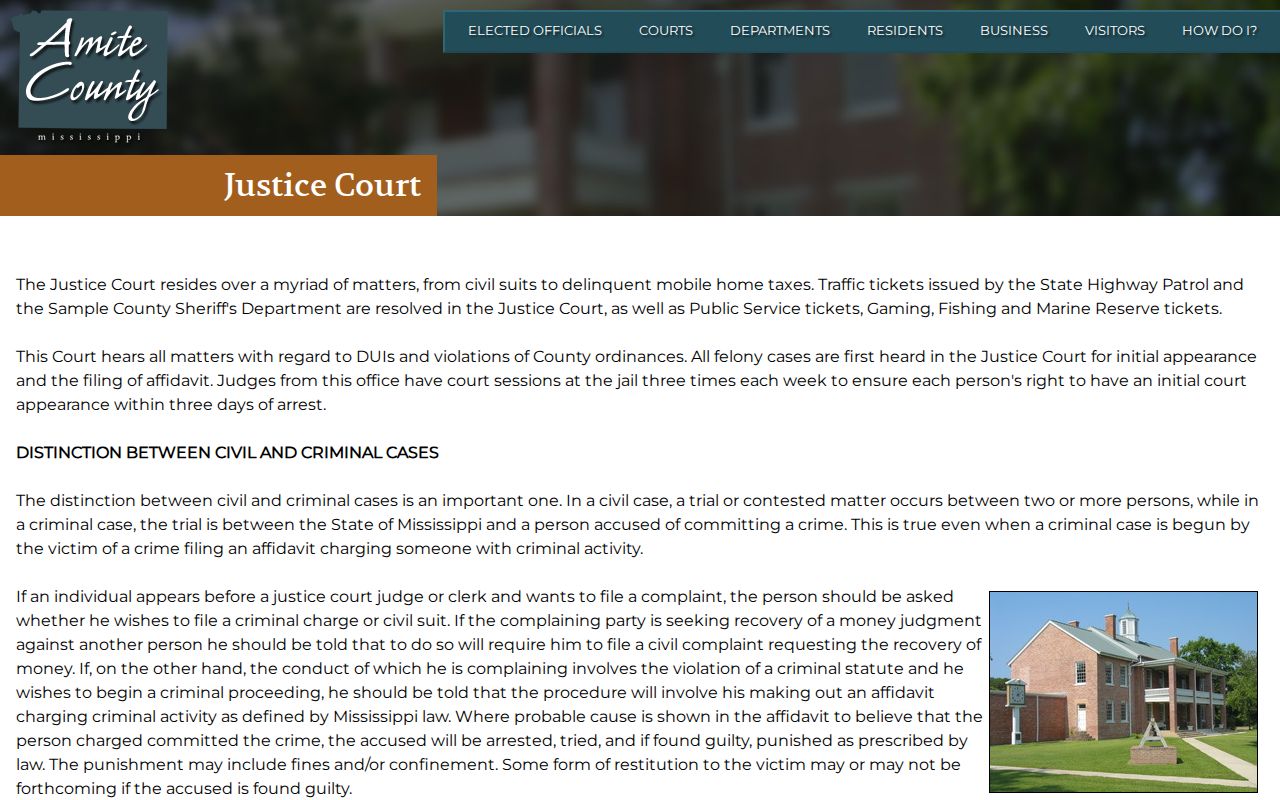
This court-level split is why a lower-court entry and a later Circuit case are not the same searchable database.
Amite Felony Docket Path to Circuit Court
Felony cases start small. Justice Court takes the affidavits and initial appearances. A case moves to Sixth District Circuit Court once the preliminary hearing and bound-over stage is done. From there the Circuit Clerk's docket picks up the paper trail: indictments, motions, process, judgments, and executions. One caution for Amite County. The official directory lists no County Court here. Skip that step when you plan an Amite County criminal docket search. Go straight to Circuit or Justice Court.
Justice Court judges hold initial appearances at the jail three times a week, per the county. That schedule shapes local timing, though it guarantees nothing about a specific arrest. It does help explain one thing. An early entry sits with Justice Court well before the Circuit docket shows anything. The county's Justice Court judge page lists both countywide Justice Court districts.
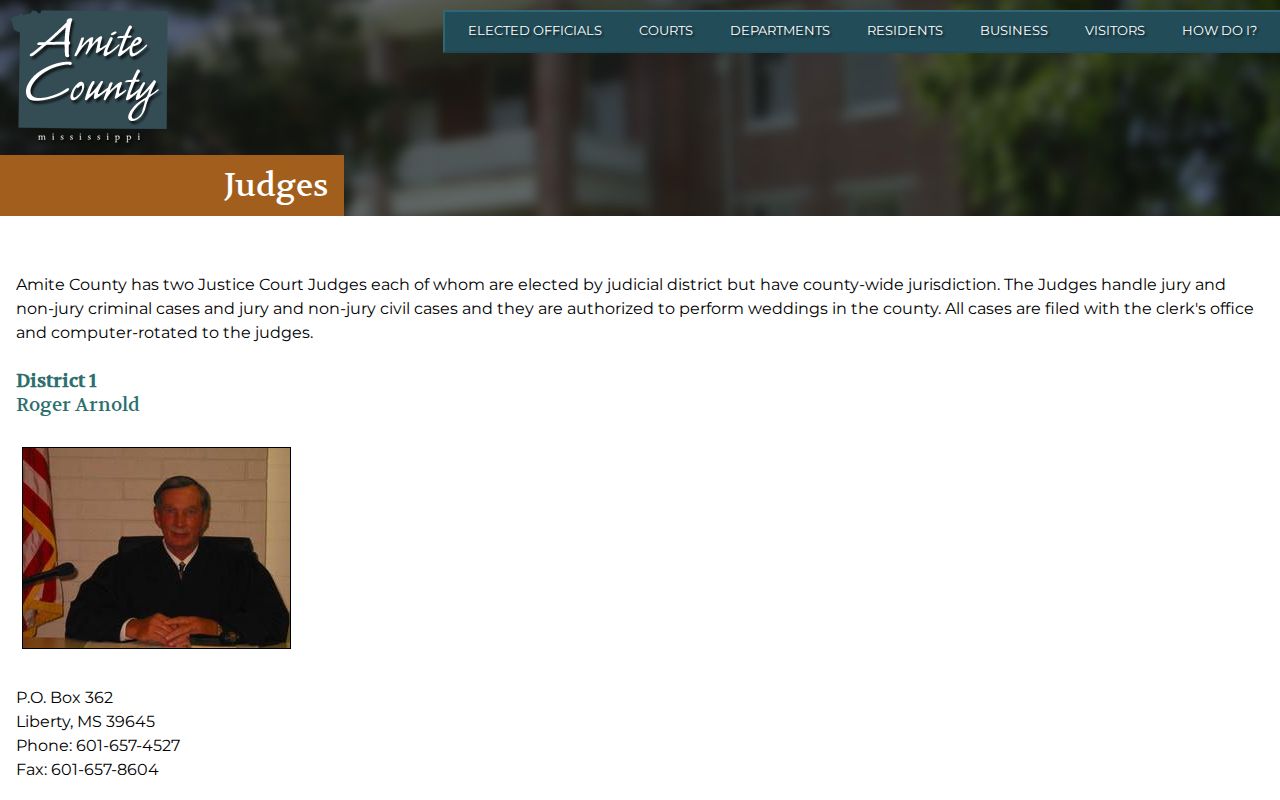
Amite County assigns cases by computer rotation. Confirm the judge from the case record itself instead of assuming by where an event took place.
Amite County Criminal Docket Courts
Circuit felony docket questions go to the Circuit Clerk at 601-657-8932. The office sits at 243 W. Main St. in Liberty. Justice Court Clerk Melanie Netterville handles misdemeanor, DUI, traffic, and felony preliminary records; call 601-657-4527 or write P.O. Box 362, Liberty, MS 39645. The county publishes no separate counter hours for Justice Court. Phone ahead before driving over.
Municipal cases stay with each city clerk, outside MEC. Centreville runs through its Police Department at 216 E. Joseph St., 601-645-5917. Hours are weekdays 8 a.m. to 4 p.m. Gloster's Town Clerk is 601-225-4216, Liberty's municipal contact is 601-657-8071, and Crosby's is 601-639-4516. Give the clerk a citation or case number. Add the name and a rough date to speed up the docket lookup.
Amite Justice and Municipal Criminal Dockets
Lower-level criminal dockets in Amite County split by charge and location. Justice Court handles county traffic, DUI, misdemeanor, and county-ordinance matters plus felony initial appearances. The municipal courts in Centreville, Gloster, Liberty, and Crosby keep city traffic, ordinance, and violation-level misdemeanor records. Their coverage applies to anything inside their own city limits.
Municipal and Justice Court requests do not disappear once PAMEC exists. A municipal clerk search still runs through that clerk. Justice Court records still run through Justice Court. This official MEC login example shows the PAMEC access choice. It also carries the system's credential and document-permission notice.
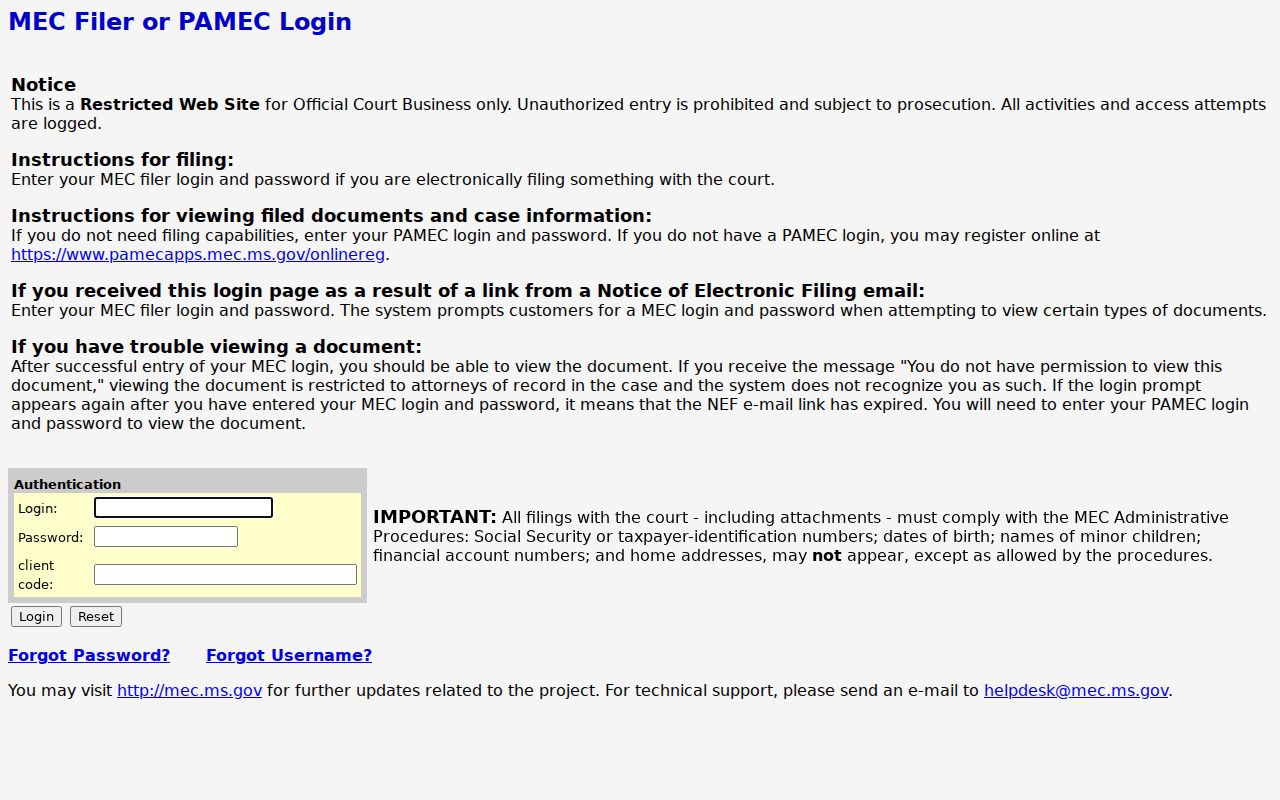
For a local Circuit case, use Amite's Sixth Circuit host. Records outside MEC go back to whichever lower-court clerk holds them.
Access Rules for Criminal Dockets
Access to a court docket has limits. The Mississippi Public Records Act sets a general inspection and copying framework, with the baseline in Section 25-61-5. But court records also answer to judiciary procedures, statutes, and orders. PAMEC's paid remote access and the free clerk-office viewing rule cover participating, non-restricted MEC files. Youth Court material, sealed filings, expunged matters, protected identifiers, and order-limited documents may stay out of reach.
The judiciary sits apart from that Act in some ways. PAMEC's privacy notice treats it as a separate branch. So inspection of court records follows court procedure and specific statutes too. Denied access? Ask which rule or statute applies. Request a redacted segregable version where fitting. Keep your written request plus the response. One more wrinkle: a public event entry can stay visible on the docket. A sensitive document in the same case may still be restricted.
Key rules:
Mississippi Public Records Act, including Section 25-61-5 provides the state’s general public-record inspection framework.
MEC Administrative Procedures provide paid remote PAMEC access and free clerk-office viewing for non-restricted files.
Mississippi Law access is the official route to statutes, including the expungement law that governs eligible relief.
Amite Criminal Docket Files and Current Limits
A PAMEC result is an electronic docket view, not a certified copy. Some non-restricted documents open for viewing, while others sit behind document permissions. For an official outcome, ask the responsible clerk for the signed judgment, order, or certified copy. A search that comes back empty has three usual fixes. Check whether the case belongs to Justice Court or a municipal court instead. Check whether the file is restricted, or whether the record simply is not indexed electronically yet.
Federal criminal cases live apart from Mississippi state court dockets. CourtListener offers free federal docket and opinion discovery. But confirm any missing federal docket or document through PACER or the federal court itself.
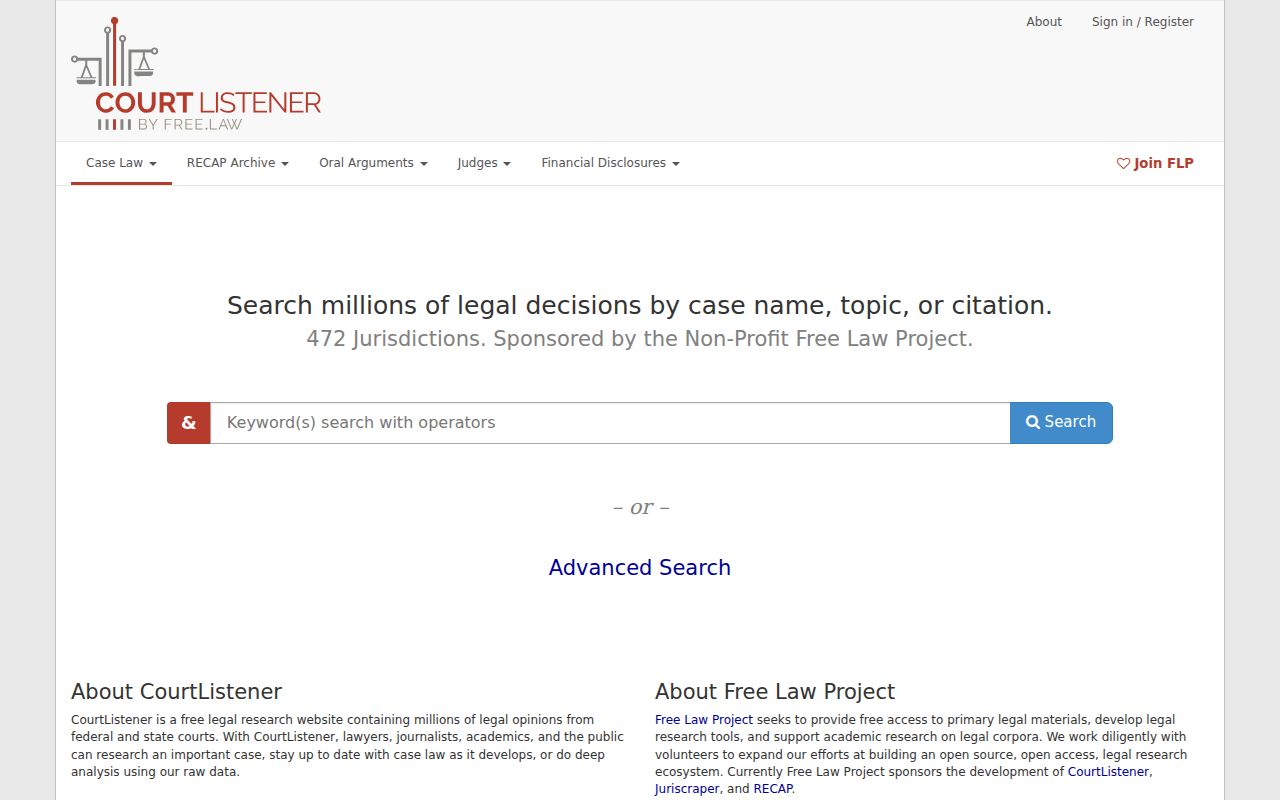
That federal interface does not reach Amite Circuit, Justice, or municipal criminal records. Those stay in their own state and local channels.