
Crosby Court Docket Searches
Crosby offers no online court docket, citation lookup, calendar, payment page, or records-request form. Phone calls are the working route. A requester holding a ticket should give the clerk the citation or case number. No number? Offer the name, the rough date, the issuing agency or officer, and where it happened. The court can then identify who holds the Crosby file, confirm the current appearance information, and say whether payment is an option.
- Read the Crosby citation for its court, issuing agency, location, case or citation number, and date.
- Call the Crosby municipal contact to ask whether Crosby Municipal Court holds the city case.
- Give the citation or case number, or use the name, approximate date, and issuing agency when no number is available.
- Ask for the current court date, record status, payment availability, and any appearance requirement.
- If the ticket was issued outside municipal jurisdiction, ask whether Amite Justice Court is the correct custodian.
A blank results page is not a ruling in the case. Crosby posts no public online search form, so the clerk inquiry is the local channel for any record search.
Crosby Split-Municipality Court Records
Crosby sits astride a county line. Part of the town reaches into Amite County, and part lies beyond it. Where a case lands depends on the paper, not the map. A Crosby Municipal Court citation stays a municipal matter. A Justice Court ticket depends on which agency wrote it and where. Read the ticket first. Never assume every Crosby item belongs in Amite County court records.
The court named on the citation matters most. The agency that issued it tells you more than the county line does. The municipal clerk can pull a local Crosby file. The county court clerk can find a county case if the paperwork actually points there.
Name the spot, the enforcement agency, and the citation number when you make a request. A shared town does not put a municipal file in the Amite County courthouse. The clerk's confirmation of the court printed on the paper settles it.
Inside the Crosby Municipal Court
Crosby Municipal Court is the first stop for a city citation. That covers traffic or ordinance matters written inside Crosby. The Mississippi municipal directory lists a municipal clerk and judge structure. But the town has no municipal website, court-docket page, schedule, ticket search, payment vendor, citation format, fine table, or copy schedule to check. Ask the municipal contact directly how the record is held and what the court requires. The municipal court is not the home of every case tied to a Crosby address. Felony, family, probate, and major civil matters follow their own county-level jurisdiction. The municipal docket is its own local file, separate from the county docket.
Crosby Court Clerk Contact
The 2023 Mississippi municipal directory is the official source for Crosby's public municipal contact. It shows incorporation in 1934. It also lists the municipal clerk and judge structure, and a phone route to the local city court. Crosby publishes no dedicated court webpage, so call the number to confirm the custodian. Assume nothing about online payment or search services.
Crosby Municipal Court Contact
P.O. Box 338
Crosby, MS 39633-0338
601-639-4516
Fax: 601-639-4517
For a Crosby city citation, ask the clerk a few direct questions. Which court holds the record? Has it been entered? What is the current appearance date? Can a plain or certified disposition be requested?
Finding Crosby Court Dates
The citation itself is the first place to find a Crosby court date. Crosby publishes no official online calendar or session schedule. The municipal contact must confirm the current setting. A date printed on an older ticket may hide a later reset or other change. Give the clerk the citation number and the date on the paper. Then ask for the current appearance information and whether anything is due before that date.
| Citation or case number | Use the identifier as printed; no Crosby citation format is published. |
|---|---|
| Party name | Helps the clerk locate the correct Crosby municipal record. |
| Violation date | Provides a time reference if a case number is unavailable. |
| Issuing agency | Helps determine whether the file is municipal or belongs to Justice Court. |
| Requested result | Ask for the current setting, status, or plain or certified disposition. |
Crosby Court Date Request Fields
No verified online form handles a Crosby court request. So give the clerk only the facts that distinguish the case. The useful checklist: a citation or case number, name, violation date, issuing agency, the court date printed on the citation, and a request for current status or a plain or certified disposition. Missing ticket? The approximate date and location help. They let the clerk tell a city citation from a county ticket. Crosby publishes no result limit, public search field, login, download option, or payment processor. It sets out no official deadline, copy fee, fine amount, or certified-copy charge either. Ask the clerk for current instructions before sending money or trusting an assumed date.
Crosby Traffic Ticket Lookups
A Crosby city ticket or ordinance citation belongs to Crosby Municipal Court, reached at 601-639-4516. Tickets written outside city jurisdiction are different. A state or county traffic ticket belongs to Amite Justice Court at 601-657-4527. Look at the issuing agency printed on the ticket. That, plus where the stop happened, tells you which clerk to call. The town's split-county situation does not change it, and neither does a Crosby mailing address. The court named on the ticket controls.
Once you reach the right court, ask whether the citation has been docketed and when it is set. Ask whether you can pay by mail or in person. Ask whether an appearance is required. Follow the payment instructions the citation prints or the court confirms. Crosby publishes no online payment option. No fine schedule, defensive-driving rule, deferred-disposition option, or set fee for traffic copies appears either. For the countywide picture, the Amite County traffic court page explains how the two routes divide.
Crosby Court Portal Limits
Crosby offers no court portal. There is no online docket search for city cases. There is no login screen, no results list, no export, and no way to view a document or pay a fine over the web. So do not expect one. And do not let anyone promise you a page that does not exist. For a Crosby court docket, the clerk's phone line is the working method. Ask what the clerk needs to pull the case. Skip any guesswork about fees or screens.
County-level cases work differently. Circuit and Chancery files that are not restricted can be viewed electronically through PAMEC, the state system for public trial-court records. That system is separate from the city. It will not answer a Crosby Municipal Court citation.
PAMEC public access asks for registration once a year and charges for the search pages it generates. Free electronic viewing of MEC civil and criminal files is available at the responsible clerk's office during normal business hours. That holds unless a record is restricted. Neither route carries a Crosby municipal docket, a citation result, a local payment page, or a city copy fee. For any city record, start with the Crosby clerk.
How Crosby Cases Reach the County
Crosby Municipal Court → Amite Justice, Circuit, or Chancery Court. The case and its jurisdiction decide which. A city traffic or ordinance case opens in the municipal docket. State traffic written outside city jurisdiction goes to Amite Justice Court. Felony charges and major civil matters land in Circuit Court. That is the county's trial court. Chancery Court takes family, estate, guardianship, land, and equity cases. The case type picks the court, not the Crosby name on an envelope.
For Circuit and Chancery files, PAMEC offers electronic public access to participating, non-restricted cases. Its own account and fee rules apply. The Amite Circuit and Chancery clerks still hold the county files. The Crosby Municipal Court clerk holds the city citation record.
When a case leaves municipal court, do not guess the appeal destination or deadline from a general rule. Read the citation, judgment, or order itself. Then ask the clerk now holding the record which court has the case. Ask what deadline applies. That matters most where the city boundary meets the county court system.
Crosby Municipal and State Court Records
Sorting municipal work from county work is the first step in any Crosby case lookup. A city citation stays with Crosby Municipal Court. A Highway Patrol or Sheriff ticket issued outside the city goes to Amite Justice Court. Circuit and Chancery matters are county trial-court files, not municipal ones. Remember that a blank PAMEC result does not prove a city citation is missing. Justice and municipal court dockets sit outside that electronic trial-court system.
The Amite County Justice Court page lays out traffic and lower-court jurisdiction. If the citation does not name a court clearly, ask the Crosby contact first. Ask which clerk holds the local record. Then follow the route that clerk confirms.
Who Can See Crosby Court Records
Request Crosby court records from the clerk who holds the municipal case. Public access has limits, though. Mississippi's Public Records Act sets the general baseline for inspection and copying, but court rules, statutes, and individual orders also govern what a clerk can release. The municipal clerk can tell you whether the record exists. Ask whether parts must be redacted. Ask whether a plain or certified disposition can be supplied.
Access limits: Mississippi Public Records Act includes §§25-61-1 through 25-61-19 and §25-61-5. Court rules and orders can limit access. Youth Court, adoption, commitment, expunged, sealed, and court-order-limited material may be unavailable. Personal identifiers can be removed from a record that is otherwise open for inspection.
If the clerk cannot hand over what you asked for, ask for the reason. Ask whether a redacted or partial version exists. A denial is never a reason to go hunting through an unrelated court system.
The public-record statute does not create an anonymous Crosby court portal. It sets no published copy price either. It provides a framework, while court-specific rules and restrictions still control. A focused request, naming a known citation, a current setting, or a disposition, gives the clerk a practical way to identify what can be released and how to handle it.
Crosby Court Geography Context
Crosby sits on the Amite and Wilkinson county line and took its incorporation in 1934. The 2020 Census counted just 242 residents, making it the smallest incorporated place around. Small town, but the geography matters. Anyone chasing a Crosby court record has to pin down which agency issued the ticket and where the case sits. The court by name matters too. Those population facts say nothing about caseloads. Court dates and docket search traffic aren't in the numbers either. The Census TIGERweb incorporated-place table is where the 2020 Crosby population count is published.
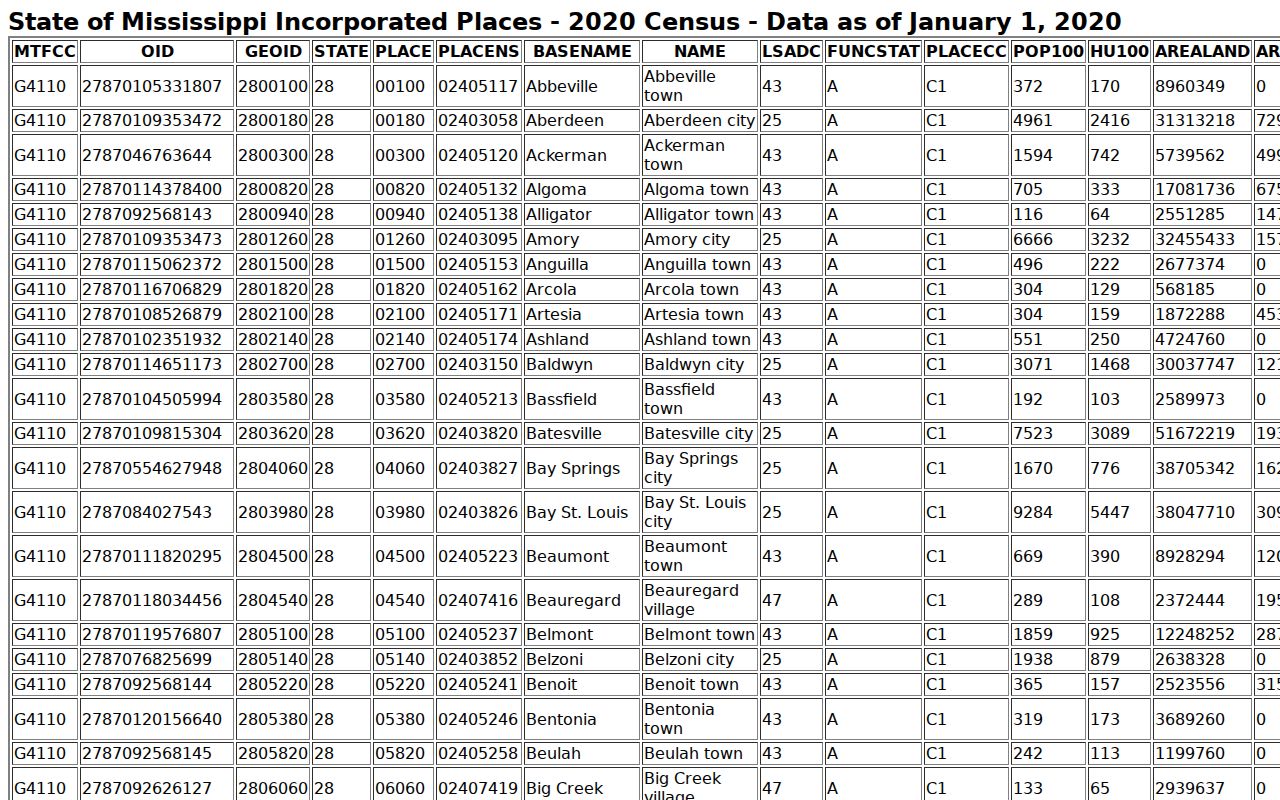
The place table gives geographic context and nothing more. It is not a Crosby court docket, and it lists no cases. The Census city and town population-estimate table is another official source for population figures, and it covers Crosby among other towns.
Population numbers tell you almost nothing useful here. A Crosby court record lives with the municipal contact listed on your citation, not in any census table. Skip the demographic guesswork entirely. The town's size has no bearing on how many tickets get filed, how busy the docket runs, or whether a record system exists at all. Whatever Crosby's headcount, the route stays the same: read the citation, spot the issuing jurisdiction, and ask the Crosby clerk whether the Municipal Court holds the case. Census material describes the place. It does not describe the court file.